Comparing the Cost of Living Across DFW Cities in 2026
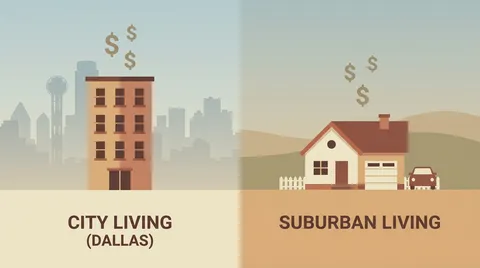
Quick Answer: Cost of living across DFW varies a lot by city. Southlake runs well above the national average while Grand Prairie sits near the median, and housing is the biggest slice of the monthly bill almost everywhere. Where you land in the metroplex matters more to your budget than the metroplex itself.
I had a client relocate from Chicago last spring. She’d done her research, found a salary bump, and was thrilled about “no state income tax.” Then her first property tax bill landed in Collin County. Her exact words: “Kristy, nobody warned me about this.” She wasn’t wrong. Texas gives with one hand and takes with the other, and the cost differences between DFW cities can blindside you if you don’t know where to look.
That’s the thing about the Dallas-Fort Worth metroplex. It isn’t one market. It’s dozens of micro-markets stitched together, and the cost of living between them can swing well over $2,000 a month for what feels like a similar lifestyle. A three-bedroom in Grand Prairie and a three-bedroom in Southlake might look alike on paper, but your monthly bottom line tells a very different story.
I’ve been helping families sort through these cost differences since ‘97. Here’s what the numbers actually look like in 2026, city by city, so you can make a smart move instead of an expensive mistake.
What Are the Most Affordable Cities in DFW for 2026?
The most budget-friendly spots in Dallas-Fort Worth deliver real savings without forcing you to sacrifice quality of life. Grand Prairie, Garland, and Mesquite consistently rank as the metroplex’s most affordable major cities, and there’s good reason they’re attracting more buyers every year.
Grand Prairie leads the pack, sitting just a hair above the national average. Housing runs in the ballpark of $1,650 a month for a three-bedroom, with utilities around $180. What most people don’t realize is that its location is actually solid. You can reach both Dallas and Fort Worth without too much pain via the DNT Toll Road and I-30. Not glamorous, but practical.
Garland follows close behind, with three-bedroom housing in the neighborhood of $1,750 a month. Here’s what I love about it for budget-conscious buyers: it has excellent DART connectivity, so you can cut your transportation costs if you commute to downtown Dallas. After placing dozens of families here, my sense is that groceries and dining run a fair bit below what you’d pay inside Dallas city limits. That adds up fast.
Key affordability points to know:
- Housing well below Plano or Frisco
- Property taxes in the rough range of $2,800 a year per $100K of value
- Utilities below the metroplex average
- Gas typically a few cents below the premium suburbs
Mesquite deserves a shoutout too. It’s often overlooked, but families who give it a chance find affordable housing, decent schools, and easy access to Lake Ray Hubbard for weekend recreation. I had a young couple who almost wrote it off without visiting. They ended up buying there and saving over $800 a month compared to their original Plano target.
How Much Does Housing Cost in Premium DFW Cities?
Now the other end of the spectrum. Premium DFW cities cost significantly more, but you’re paying for top-tier schools, amenities, and neighborhoods that hold their value like few places in Texas.
Southlake tops the premium market, with median home prices around $850,000 in 2026. Monthly housing for a typical four-bedroom lands near $4,200 once you fold in property taxes to Carroll ISD. That’s real money. But residents get Southlake Town Square practically in the backyard and some of the highest-rated schools in the state. You won’t find many people who regret the investment.
Highland Park comes in a touch lower on monthly housing, in the neighborhood of $3,800. Highland Park ISD consistently ranks among the best in Texas, and that’s the main draw. Families pay the premium specifically for the education. Properties near Knox-Henderson command even more because you’re adding walkability and nightlife to the equation.
University Park rounds out the top tier. It’s essentially the same school-district advantage as Highland Park with a slightly different neighborhood character. Think tree-lined streets, well-kept older homes, and a community feel that’s hard to replicate. The kind of place where you’ll know your neighbors’ names within a month.
Working with high-end buyers, here’s what these areas deliver:
- Resale values that tend to appreciate faster than the metroplex average
- Top-tier shopping and dining within walking distance
- School districts among the highest-rated in the state
- Property tax rates roughly $2.10 to $2.40 per $100 of valuation
Is it worth the premium? That depends entirely on your priorities. I’ve seen families stretch for Southlake and never regret it. I’ve seen others choose Frisco, save six figures, and be just as happy. There’s no universal right answer.
What Are Transportation Costs Across DFW Cities?
Transportation is the budget line that surprises most DFW newcomers. Where you live doesn’t just affect your mortgage, it determines whether you’re spending $200 or $600 a month getting to work.
Downtown Dallas residents win the transportation game hands down. A monthly DART pass runs about $96, wiping out parking fees that can top $200 in Uptown. If you’re within walking distance of the American Airlines Center or Deep Ellum, ride-share costs drop to almost nothing for weekend outings.
Suburban cities need bigger transportation budgets. Frisco and Plano residents typically spend a few hundred a month on vehicle expenses: gas, insurance, maintenance, and parking. The silver lining for Plano is its DART Red Line stations, which give you downtown access for that same $96 a month without touching your car. Carrollton’s three DART Green Line stations pull off the same trick at a lower entry price than a Plano address.
After tracking my clients’ transportation costs for a long time, here’s the pattern:
- DART-accessible cities save residents a meaningful chunk each month versus driving
- Toll-road usage adds up fast for frequent commuters on the Dallas North Tollway
- Gas costs vary a few cents per gallon across the metroplex
- Parking fees in premium areas can run $100 to $300 a month
I always tell relocating families to test their commute before they buy. Drive it during rush hour. Price the tolls. Check if there’s a DART station nearby. These aren’t small numbers. Over a year, the wrong location can cost you a few thousand dollars more than you’d planned. That’s money you could have put toward your mortgage.
When Is the Best Time to Relocate for Cost Savings?
Timing your DFW move can save you thousands, and it’s one of those tricks most people don’t think about. Late fall and winter are your best friends for a budget-conscious relocation.
November through February is the sweet spot. Rental markets soften in winter, especially near universities where leases cycle with the school year. Moving companies drop their rates in the off-season too. I’ve had clients save over $2,000 just by shifting their move from June to January.
Utility connection timing matters more than you’d think. Scheduling hookups during mild-weather months often reduces initial deposits and connection fees. Several electric companies waive deposits entirely for connections in the cooler months, which keeps a few hundred dollars in your pocket.
Practical savings to expect from a winter move:
- Lower monthly rent on winter leases
- Moving-company discounts off peak summer pricing
- Utility deposit waivers worth a few hundred dollars upfront
- Less competition for the best rental properties
And a bonus most people miss: home purchase prices tend to soften in winter too. Sellers who list in December and January are often more motivated, which means better negotiating power for you. I’ve closed some of my clients’ best deals between Thanksgiving and Valentine’s Day.
How Do Lifestyle and Entertainment Costs Compare?
This is where the urban-versus-suburban debate gets real. Your entertainment budget can swing wildly depending on whether you’re grabbing dinner in Uptown Dallas or Legacy West in Plano.
Downtown Dallas and Uptown dining runs higher than the suburbs. Dinner for two might average $75 to $95 at an Uptown restaurant versus $45 to $60 in Frisco or Plano. But the flip side: urban residents save on rides and parking since they can walk to most spots. It’s a trade-off, not a clear win for either side.
Suburban areas like Legacy West offer a nice middle ground. Legacy Hall has diverse dining below downtown pricing while still feeling upscale. You’re not sacrificing atmosphere, you’re just not paying the downtown tax.
Bishop Arts in Oak Cliff has become another interesting option, with an artsy, independent restaurant scene and no Uptown price tag. I’ve placed several young families nearby who love being able to walk to dinner without dropping $150.
Budget realities to keep in mind:
- Urban dining tends to run higher per person than suburban alternatives
- Suburban areas offer more family-friendly pricing across the board
- Downtown parking adds up over a night out
- Suburban venues almost universally offer free parking
So your lifestyle costs depend less on DFW as a whole and more on which pocket of the metroplex you call home. Pick the neighborhood that matches how you actually live, not how you think you should live.
Frequently Asked Questions
Q: Which DFW city offers the best value for families with school-age children? A: Since ‘97 I’ve consistently pointed families toward Frisco ISD areas. You get excellent school quality at a moderate premium, usually below Southlake while holding top-tier standards. It’s the sweet spot where value and quality overlap.
Q: How much should I budget monthly for utilities in DFW cities? A: Plan for roughly $180 to $220 a month for an average three-bedroom, with swings based on efficiency and season. Newer construction in areas like Legacy West usually runs lower because the insulation and HVAC are more efficient. Summer electric bills can spike, though. August in Texas isn’t cheap.
Q: Are property taxes significantly different between DFW cities? A: Night and day. Rates run roughly 2.1% to 2.8% across the metroplex depending on the city and its taxing entities, so your county appraisal district is the place to confirm the exact number. After years of walking families through this, I can’t stress it enough: always fold taxes into your total monthly housing cost. A “cheaper” house in a high-tax city can easily cost more than a pricier one with lower rates.
Q: What hidden costs should I expect when relocating to DFW? A: Budget for utility deposits (a few hundred dollars), vehicle registration transfers, and HOA fees that vary wildly, anywhere from $50 to $300 a month depending on the neighborhood. And don’t forget toll tags. If you’re commuting on the Dallas North Tollway, that’s a real monthly expense nobody mentions in the brochures.
Q: How do grocery and daily living costs compare across DFW cities? A: Groceries stay pretty consistent across the metroplex. You’ll find a Kroger or Tom Thumb everywhere. Premium areas might have fancier options like Whole Foods and Central Market, but budget alternatives exist in every DFW city. It’s honestly one area where location barely moves the needle, so don’t let it drive your decision.
Ready to find the right DFW city for your budget and lifestyle? Call or text me at (972) 345-3516 and we’ll map your relocation to where your money actually goes furthest.
Need expert guidance?
28 years of DFW real estate expertise. One phone call away.
Free DFW Relocation Guide
Neighborhood quiz, cost-of-living worksheet, and 30-day checklist for new arrivals.

About the Author
Kristy Purtle has been a licensed Texas REALTOR® since 1997, helping families buy and sell homes across the Dallas-Fort Worth metroplex. With 28 years of local market expertise, she provides personalized service from listing to closing.